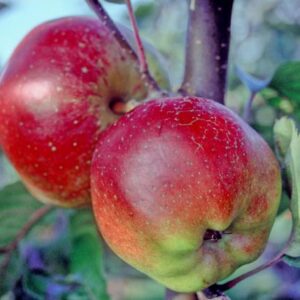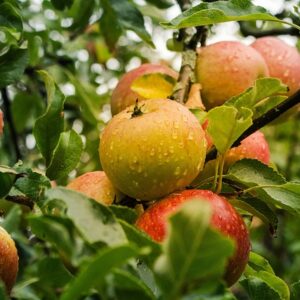
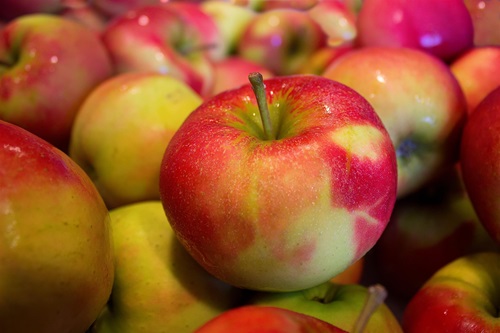
Sansa apples were developed in the 1970’s by the Morioka Research Station in Japan in collaboration with researchers in New Zealand. Some sources say the intent was not to create a more disease resistant Gala, but that has become Sansa’s gift to the world. Gala is a much loved apple but its trees struggle with disease susceptibility. Sansa has all of the famed attributes of its Gala parent but far superior disease resistance.
Sansa is a cross between Gala and Akane. Akane is a Japanese apple that is naturally disease resistant. When asked to describe Sansa’s flavor, its been stated that Sansa is “just an early ripening Gala.” Other than the fact that it ripens one week ahead of Gala, it’s basically a Gala.
Sansa apples aren’t seen very often in stores because the trees are strictly a home-growers choice. The branches aren’t unilateral which presents challenges for the commercial industry. In other words, it will grow to look like a tree rather than have branches that can be manipulated onto trellises.
One drawback of Sansa is that the tree grows slower than some other varieties.
Sansa has a sweet, tart taste, and is considered one of the better tasting early varieties. They are great fresh eating apple and can be used in cooking and baking. However, to use them for sauce, you will need to blend them after cooking, as they doesn’t cook down smooth.
Sansa is also not a good storage apple. Storage is limited to no more than a month under refrigeration.
But if you are looking for that apple with a great taste that you can eat right off the tree, Sansa is it!
Pollinate with Liberty, Yellow Transparent, Summer Rambo, or Smokehouse. Tree will grow to be 18′ to 20′ and will be free standing at maturity. Sansa apples ripen in August.