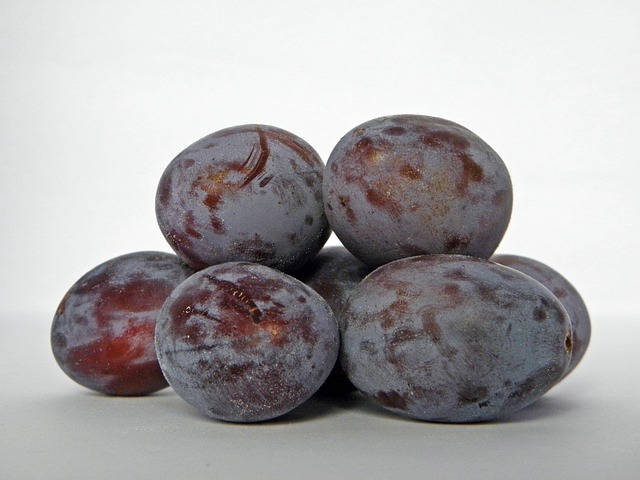
When most folks think of plums, they often picture the Stanley plum. It’s been around since 1926 and has proven itself to be the leader in the plum world. In fact, Stanley is considered the standard for European plums, so all other plums are measured against it.
There is one negative to Stanley though. It does not have any disease resistance and is highly susceptible to Black Knot, which is extremely difficult to treat and often results in the death of the tree.
Stanley is self-pollinating but it will produce better with a pollinator like Long John or Bluebyrd. Fruit is ripe in early September.
Stanley is free-stone, so the pit pulls out easily. It is good eaten fresh, in baking, and dried. Stanley is considered a prune plum, which means that the fruits can also be dried or canned to make prunes.
The tree blooms late, which is great for Garrett County. It is a reliable producer, and is very cold-hardy, surviving as low as zone 4. You will not want to plant this tree in heavy clay soil.