Bluebyrd is also a Black Knot resistant plum. Black Knot is a huge problem for plum trees. Once a tree contracts it, it will kill the fruit and eventually the tree as well. The only way to get rid of it is to cut off the parts of the tree where the knots appear, which in my experience is about everywhere, and even that is not overly effective. So, all three of the plums we are offering are resistant to Black Knot. After all, what good is it to buy a plum tree, nurture it to maturity, and have it die before you even get much of a harvest?
Bluebyrd is known for its sweet plums. It is vigorous, hardy, and productive.
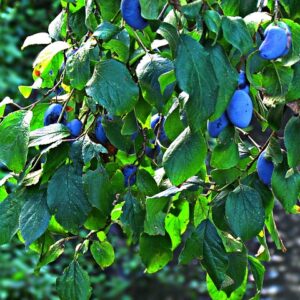
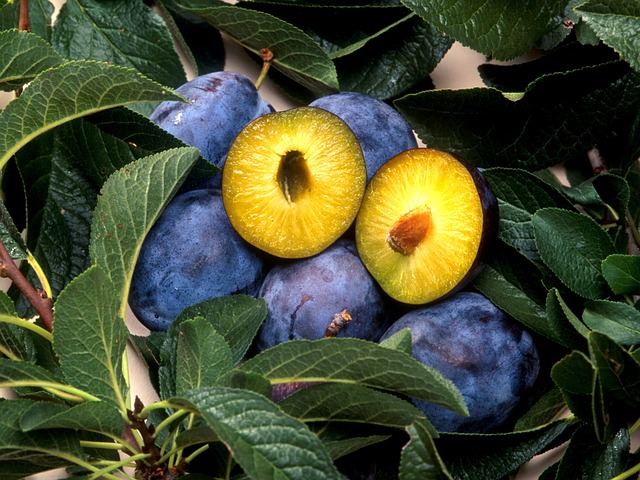
Bluebyrd is a more recent cultivar produced by the Appalachian Fruit Research Station in Kearneysville, West Virginia. It is named after Robert C. Byrd. The plums are a deep blue color with amber colored flesh.
You will not want to plant this tree in heavy clay soil. It will grow in all other soil types though. If you need one that grows in heavy clay, purchase Long John.
Bluebyrd is cold-hardy, and we have put it on the cold-hardiest rootstock available, so it will have no trouble handling winters in the area.
Bluebyrd will need a pollinator. You can pollinate it with Kenmore or Long John.
Last year, we put Long John on a rootstalk that grows well in heavy clay soil. This year, we switched Bluebyrd and Long John’s rootstalks so that folks who have heavy clay soil could purchase the other variety for better pollination. For 2026, Bluebyrd will grow well in heavy clay soil. Long John is better suited to sandy soil to sandy loam.