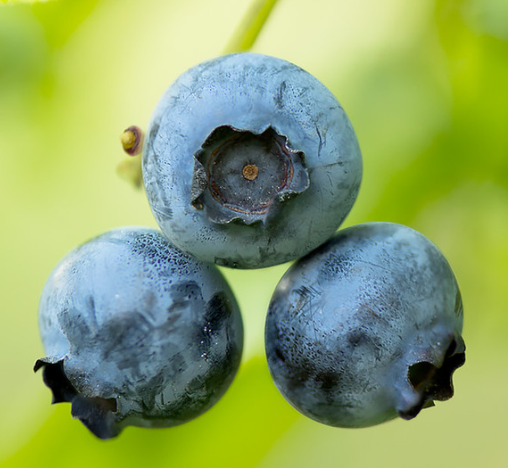
Blueberries were exceptionally difficult to cultivate, and until the 1900’s it simply wasn’t possible. Plants died if they were dug up and transplanted to fields in an attempt to grow them in home gardens or for commercial sales. There were both high bush and low bush blueberries growing natively in North America, but another problem in trying to cultivate them is that in order to be cross pollinated the chromosomes of the plants needed to match. Many varieties had different chromosomes even though they looked the same.
There are two names to remember in blueberry cultivation, Frederick Coville and Elizabeth White. These two spent their entire lives trying to cultivate the blueberry. Blue Crop was one of their successes. Interestingly, it was a seedling that was released from Frederick’s collection after his death. In order to grasp the full value of Blue Crop, we need to understand how Frederick and Elizabeth created some of their varieties. Basically, they went out into the wilds and found the very best specimens for flavor and berry size and propagated them to produce many offspring of those plants. Sometimes they crossed different wild berry bushes to combine the most desirable traits of each. But because of issues regarding chromosomes, it made it far more difficult to crossbred these plants, meaning those original cultivars were closer to the parent plant than cultivars of most fruits and vegetables grown today. And in many cases, they were simply propagating plants they found in the wild. And because it took until the mid 1900’s to actually fully be able to cross-breed blueberries extensively, cultivars like Blue Crop are much closer to their native ancestors.
Blue Crop is a descendant of the native North American highbush blueberry plant. Some sources say that this plant was a bush referred to as simply “Highbush Blueberry” in the wild. We know Native Americans ate the berries from these tall bushes back in the 1600’s. Blue Crop gets its name from the meaning “blueberry bush that can produce a crop of berries in a field commercially” – a great achievement for the time period.
It’s been the most popular cultivar of highbush-type blueberries world-wide. It is disease resistant and super cold hardy. But what’s more, the berries have a great flavor. They are slightly tarter than more modern cultivars, but if you let them ripen until the berries no longer have the dusty look and are very dark in color they are quite sweet.
Although Blue Crop was officially recognized as a variety in the 1940’s it was propagated by Frederick earlier. The heirloom quality of Blue Crop is its close ancestry to the original native American wild highbush blueberry plants. Many cultivars today have been crossbred many times with other cultivated varieties, taking them far from their wild relatives.
The blooms which arrive in May, have good frost tolerance.
Fruit yields are good. And the bush fruits early. So, while you are waiting for some other varieties to develop that first berry, Blue Crop could be already producing.
Blue Crop is self-pollinating, but as with all self-pollinating plants, harvests will be larger with a pollinator. Patriot, Sunrise, and Elizabeth will pollinate it.
Look for fruit to ripen mid-July.